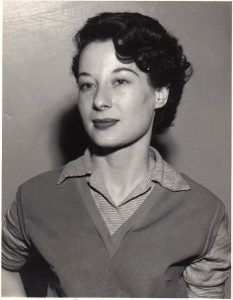
After my dad died at age seventy my mom began preparing for her entrance into the next world. Her childhood memories of living with an embittered grandmother who ruled the household with irrational rantings must have prompted her decision to move away from her children. Did Mom fear becoming an abrasive weight on our shoulders? Although she never mentioned it, I believe she vowed to never let her kids suffer the way she did. She wanted control of her own care.
She decided to move to a retirement community that had three levels: independent living, assisted living and a nursing home. She felt secure in her choice, despite the fact she would be far away from family. She left Morehead City, where my sister also lived, to reside in Charlotte, North Carolina—an eight hour drive. I tried to convince her to move to a senior center near my home in Pennsylvania. “No, it’s too cold,” she said. I was disappointed she didn’t want to live near us.
My husband and I had also offered our home. Although her independent nature prevented her from accepting our offer, I took comfort in the fact she knew she was welcome. I admit I felt a mixture of relief and remorse. I didn’t want her to miss out on visits with grandkids, Christmas, and birthday parties. But I was relieved I didn’t have to add daily concern for her needs into my hectic routine.
About a year before she died, Mom started talking about going home. Or the way she put it, not sticking around any more. “I don’t want to live if life isn’t worth living,” she said. She was losing weight for no apparent reason and tests showed no causes. Her COPD became worse and her dependence on oxygen went from nightly to 24 hours a day. She worried that even during a trip to the dining room her oxygen tank might run out.
The miles that separated us frustrated me. However my sister and I were thankful for one thing. She had a boyfriend, another resident, who doted on her. We knew Mom was in good hands with Lee, who made her care his mission.
Respiratory infections became more frequent. One in particular dragged on for months despite rounds of antibiotics. She grew too weak to walk to the dining room. Lee began bringing Mom’s meals to her room.
One day while we talked on the phone, I heard a distinct change in her voice. Her words slurred. She sounded irrational. I called my sister Alison. She shared my alarm. Talking with Lee gave us no satisfactory answers. He had become extremely hard of hearing, communicated little, and sounded weary. It was time for us to intervene. I arranged airfare and Alison recruited employees to manage her business while she was gone. Soon afterward, Mom phoned me. “Do you think you girls could come later? This isn’t a good time.”
She seemed oblivious to what we saw as an emergency. I tried to keep my voice controlled. “We’re worried about you Mom. We want to see you.” She reluctantly agreed.
I flew to Charlotte four times in six weeks. My sister and I learned from the social workers and nurses that they had been watching Lee and my mom for some time. Why hadn’t they intervened? They understood how difficult it is for the elderly to give up their independence, and as much as is safely possible, how important it is to help them be part of the decision. We helped Mom choose to receive more nursing care. Lee no longer was able to provide her with what she needed.
Preparations to place her in assisted living failed. My mom had so deteriorated she qualified for hospice care. She died within the month.
Alison and I had watched her decline until she could no longer eat, speak or even squeeze our hands. We knew it was a matter of days. Only her rhythmic breathing told us she was alive. Her respiration had been 28 breaths a minute (normal), but had risen to almost forty one night. Early the next morning I checked on her, then went on a short errand. I walked back into her room and counted her breaths. I watched her chest rise and fall. One…two…three breaths…in the space of a minute. I stroked her hair and whispered, “Bye, Mom.” I waited for her next breath. It never came.
About a week before she died a nurse had asked my mom, “What can I get you?”
“A new body,” she had quipped.
Well, now she has an eternal one. She no longer has to worry about her care. She is in God’s hands.

9 replies to "Caring for an Aging Parent: My Mom’s Story"
The Thought has been on my mind what to do when my husband is gone. He might not have long to live. I enjoy the town I live in , have lived here for the last 19 years. However my closest children are more than a thousand kilometres away. I feel much like your Mom and am glad that I found some support in what I really like to do. Thank you for sharing.
Thanks for sharing this touching story. My mom was diagnosed with AD about three months ago and is in denial. But her memory is slipping, as well as her hygiene and other issues. So sad to witness.
Bless you,
Jen
Such a beautiful story–and your mother was a beautiful woman. Thank you for sharing so openly with us.
Cindy,
Thanks for sharing your mother’s story. Walking with our parents through their later years is a delicate dance where we need God’s wisdom to know when to let them be as independent as possible, and when to intervene.
I am a writer also. I have been journalism for years and finally have my health answer which I knew all along. The western medicine doctors all told me I was wrong. Now I can write the book which I promised my mom I would do when my suspicions were verified and found true. I have a special support page on FB that I just started this week that I am going to invite you to. If it bears no interest to you then you can tell me to delete you or you can leave the group. The support group is on Hormones, Health and Happiness…a reflection of my health journey and desire to help others. No offense taken if not interested.
S
Thanks, Cindy, for sharing your mom’s story. it resonated with me as my own mom passed away the same year. Always good to take time to remember . . .
Dee Malchow
deemalco@mindspring.com
68.165.77.34
So precious, Cindy. My mom didn’t want help till she started hallucinating. Then she was afraid. I brought her to our home over a year ago. It’s been a privilege and a challenge. Am glad she seems content now (not at first). I pray we can keep her till the end. She’s 95. Your sharing was a gift. Thank you.
In reply to Richard L Allen.
So true, Richard. We don’t have that same authority to parent our parents that we had with our children. Thanks for your comment.
Thanks for sharing Cindy,
At some point as a son or daughter we often become our parents parent, but we don’t have the authority of a parent. We have to stand by and pray that the right decisions are made. It’s good to know that she had Lee, and as her time grew near you and your sister were able to spend more time with her. Thanks again.